


Introduction
Mathematics is a subject that develops logical thinking and problem-solving skills. However, many students find mathematics challenging and sometimes become discouraged while learning it. In many cases, the difficulty does not come from the subject itself but from certain mistakes students make during the learning process.
Understanding these common mistakes can help students improve their study habits and learn mathematics more effectively. When students recognize these errors and correct them early, they can build stronger mathematical skills and gain more confidence in solving problems.
This article discusses the most common mistakes students make while learning mathematics and suggests ways to avoid them.
1. Memorizing Formulas Without Understanding Them
One of the most common mistakes students make is memorizing formulas without understanding how they work.
Mathematics is not just about remembering formulas; it is about understanding the logic behind them. When students only memorize formulas, they may struggle to apply them correctly in different types of problems.
For example, in geometry, students often memorize the relationship between the sides of a right triangle without understanding its meaning.
genui{“math_block_widget_always_prefetch_v2”:{“content”:”a^2 + b^2 = c^2″}}
This formula explains the relationship between the sides of a right triangle. Understanding the concept behind it helps students apply it correctly in many situations.
To avoid this mistake, students should focus on learning why a formula works, not just how to use it.
2. Weak Understanding of Basic Concepts
Another major mistake is ignoring the importance of basic mathematical concepts.
Mathematics topics are connected. If students have weak foundations in topics such as:
- Addition and subtraction
- Multiplication and division
- Fractions and decimals
they may struggle with advanced topics like algebra, geometry, or calculus.
For example, difficulty with fractions can make algebraic equations much harder to solve.
Students should review basic concepts regularly and ensure they fully understand them before moving on to more complex topics.
3. Lack of Regular Practice
Mathematics is a subject that requires consistent practice. Simply reading examples from a textbook is not enough.
Many students make the mistake of studying mathematics only before exams. This approach often leads to confusion and poor understanding.
Regular practice helps students:
- Improve problem-solving speed
- Recognize patterns in questions
- Build confidence in solving problems
Practicing a small number of problems every day is far more effective than trying to learn everything at once.
4. Fear of Making Mistakes
Some students avoid attempting difficult problems because they are afraid of making mistakes. This fear can prevent them from learning effectively.
Mistakes are a natural part of the learning process. In mathematics, analyzing mistakes helps students understand concepts better.
Instead of avoiding errors, students should:
- Review incorrect solutions
- Identify where the mistake occurred
- Understand the correct method
Learning from mistakes strengthens mathematical understanding and reduces repeated errors.
5. Not Showing Steps While Solving Problems
Many students try to solve problems mentally or skip writing intermediate steps. This can lead to mistakes and confusion.
Writing each step clearly helps students:
- Understand the problem better
- Avoid calculation errors
- Check their work easily
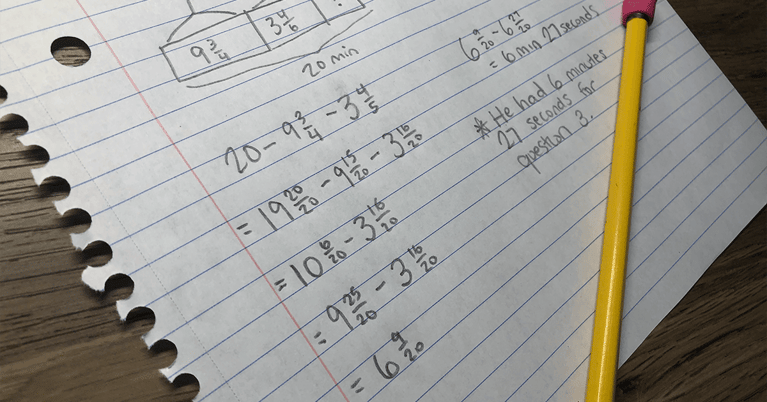
For example, when solving equations or complex calculations, writing each step ensures accuracy and makes it easier to identify mistakes.
Teachers and examiners also often require step-by-step solutions to understand the reasoning behind an answer.
6. Ignoring Word Problems
Word problems often seem more difficult than numerical questions. Because of this, many students avoid practicing them.
However, word problems are important because they teach students how to apply mathematics in real-life situations.
Common issues students face with word problems include:
- Misinterpreting the question
- Missing important information
- Not identifying the correct formula or method
To improve, students should practice reading the problem carefully and identifying key information before solving it.
7. Studying Without a Plan
Studying mathematics without a clear plan can make learning inefficient.
Some students jump between topics randomly or focus only on topics they already understand.
A structured study plan helps ensure that students:
- Cover all important topics
- Spend enough time practicing difficult concepts
- Review previously learned material
Planning study sessions also reduces stress and helps maintain consistent progress.
8. Relying Too Much on Calculators
Calculators can be useful tools, but relying on them too much can weaken basic calculation skills.
Students should first develop strong mental and manual calculation abilities before depending on calculators.
Practicing calculations without a calculator helps students:
- Improve numerical understanding
- Increase calculation speed
- Reduce mistakes during exams where calculators may not be allowed
Using calculators wisely, rather than excessively, supports better mathematical learning.
9. Not Asking Questions
Many students hesitate to ask questions when they do not understand something. This hesitation can lead to confusion and frustration later.
If a concept is unclear, students should seek help from:
- Teachers
- Classmates
- Tutors
- Educational resources
Asking questions allows students to clarify doubts and gain deeper understanding.
Learning mathematics becomes much easier when students actively engage in discussions and problem-solving.
10. Lack of Concentration While Studying
Distractions can greatly reduce the effectiveness of study sessions.
Common distractions include:
- Mobile phones
- Social media
- Television
- Noisy environments
To study mathematics effectively, students should create a quiet and organized study environment.
Focused study sessions improve comprehension and allow students to solve problems more efficiently.
Effective Habits for Learning Math

Developing good study habits can help students avoid many common mistakes.
Practice Consistently
Daily practice strengthens mathematical understanding and improves accuracy.
Review Previous Topics
Revisiting earlier topics helps reinforce knowledge and prevents forgetting important concepts.
Solve Different Types of Problems
Exposure to various questions improves flexibility in problem solving.
Stay Organized
Keeping notes, formulas, and practice problems organized makes revision easier.
Benefits of Avoiding These Mistakes
When students correct these common mistakes, they experience several benefits.
These include:
- Better understanding of mathematical concepts
- Improved exam performance
- Increased confidence in solving problems
- Stronger logical and analytical thinking
Developing proper study habits early can make mathematics much easier and more enjoyable.
Conclusion
Many students struggle with mathematics not because the subject is too difficult but because of common mistakes in their learning approach. Memorizing formulas without understanding them, avoiding practice, fearing mistakes, and studying without a plan are some of the most common problems.
By focusing on understanding concepts, practicing regularly, writing clear steps, and asking questions when needed, students can significantly improve their mathematical skills.
With patience, consistent effort, and the right learning strategies, mathematics can become an interesting and rewarding subject rather than a difficult one.